

Why tokenomics reports matter in 2025

By 2025, tokenomics reports have turned from a niche curiosity into the fine print of the entire crypto economy. After the ICO bubble of 2017, the DeFi mania of 2020, and the play‑to‑earn and NFT hype cycles that followed, one hard lesson stands out: vague or manipulative token designs eventually collapse, no matter how shiny the marketing. Teams now publish polished PDFs with charts, emission schedules and complex formulas, but that doesn’t automatically make them trustworthy. Reading tokenomics critically means treating every report like a pitch: assume they’re trying to persuade you, and your job is to verify, challenge, and look for what’s missing just as much as what’s shown.
A short historical detour: how we got here
Tokenomics wasn’t even a common word a decade ago. Early projects like Bitcoin and Litecoin had simple, transparent rules: fixed supply, predictable issuance, no pre‑mine. With Ethereum, things became more flexible: different token standards, ICOs, and the first wave of app‑specific tokens. Around 2017–2018, whitepapers casually promised “utility” without a clear mechanism for value capture. Many of those coins quietly died after the bear market. DeFi in 2020 brought “yield farming” and complex incentive schemes; some were brilliant, others pure exit machines. That turbulent history is why, in 2025, a solid tokenomics report is a necessity—but also why you should never take one at face value.
Step 1: Map the basic structure of the token
Before digging into numbers, slow down and answer one simple question: what is this token supposed to be, in plain language? Is it a payment token, governance token, access key, staking token, or some hybrid? Many reports blur these roles, hoping you won’t notice that the token is actually optional to the product. Treat the document like you would a sales brochure: strip away jargon and rewrite the purpose for yourself in one or two sentences. If you can’t do that, the design might be intentionally confusing or simply under‑thought, both of which are bad signs for long‑term sustainability and value.
Identify what the token actually does
Once you have a rough idea, dig into concrete functions. A critical reader constantly asks: what specific actions require this token, and what happens if users don’t hold it? Can they use the platform with fiat or other coins instead? Does the token give fee discounts, access to premium features, or a share of protocol revenue? Reports love big words like “ecosystem” and “network effects,” but your job is to trace a clear path from user activity to token demand. If that path is weak, then the token is more of a fundraising instrument than an economic engine, no matter how elegant the charts or formulas may appear.
Step 2: Dissect supply, distribution, and vesting
Now look at the numbers. Total supply, circulating supply, emission schedule and burning mechanisms define how scarce the asset can become. Don’t let yourself be impressed by a low unit price; focus on market cap and fully diluted valuation. Distribution tells you who benefits if the project succeeds: team, investors, community, treasury. Vesting schedules explain when locked tokens can hit the market. Learn how to analyze crypto tokenomics before investing by asking: who is sitting on large allocations, when can they sell, and how does that compare to expected user growth? A beautiful pie chart means nothing without those timelines.
Red flags in allocation charts
Tokenomics reports often hide risk behind friendly graphics. A huge chunk to the team or early investors with short vesting is a classic danger sign, especially if “community” allocations are vague. Also watch for aggressive emissions: high rewards early on can attract users but create brutal sell pressure when subsidies decline. Ask whether the inflation schedule is tied to measurable milestones, or just time‑based regardless of adoption. Another common trick is calling something a “community fund” while the team effectively controls it. To read tokenomics critically, treat every allocation category as a question: who decides how this part is used, and what is their incentive?
Step 3: Incentives, utility, and value capture
Good tokenomics align incentives among users, builders, and investors. Bad tokenomics bribe everyone with emissions until the music stops. Study how the protocol rewards behavior: are users paid in the native token for providing liquidity, staking, or governance? If so, what’s the source of that yield—real fees or pure issuance? Value capture is the bridge between protocol success and token value. Are fees used to buy back and burn tokens, shared with stakers, or held in a treasury? If the product can scale revenue without increasing sustainable token demand, the coin might stagnate even if the project looks active on the surface.
Questions to stress‑test the design
A practical approach is to interrogate the report with a short list of hard questions. For example: what happens if user growth slows—does the model still function, or does it rely on constant new entrants? If token price falls 80%, do incentives still make sense, or do providers flee? Are there mechanisms to reduce emissions over time, or is inflation forever? Ask how governance can change the rules: can a small group vote to increase their rewards or dilute others? Thinking this way mimics the mindset taught in a serious crypto tokenomics course, but you can adopt it yourself by systematically challenging every optimistic assumption you see.
Step 4: Governance, control, and legal hints
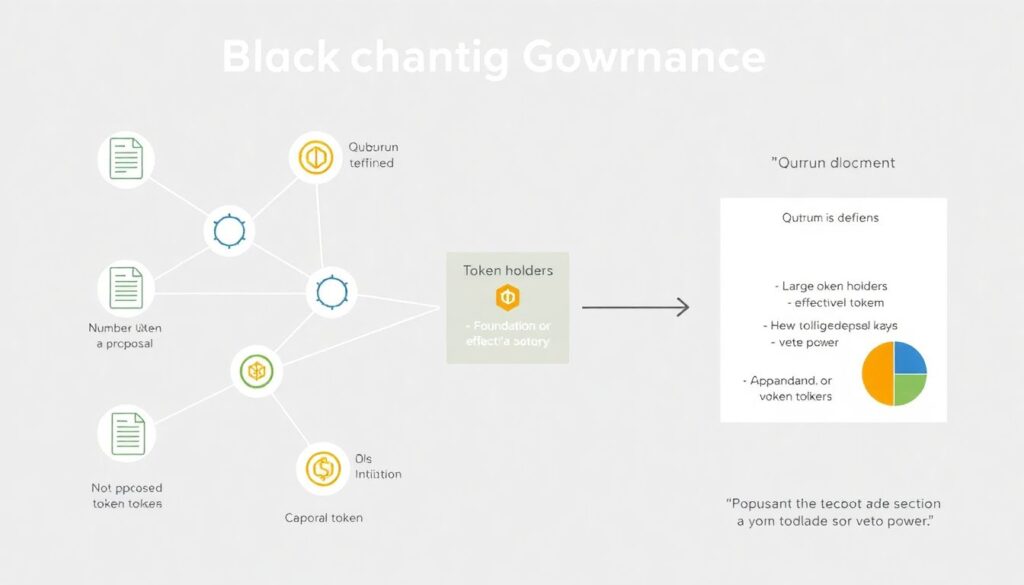
Governance sections are often treated as fluff, but they’re crucial for understanding who really controls the system. Look for details: how many tokens are needed to submit a proposal, how quorums are defined, and whether big holders effectively have veto power. If the foundation or core team owns a blocking stake, on‑chain voting might be more theater than democracy. Legal language also matters: some reports quietly mention that tokens confer no rights, no revenue share, and no obligation from the issuer, which limits your recourse. Critical reading means not just asking “what can this token do?” but also “what is it explicitly not promising me?”
Who really holds the power
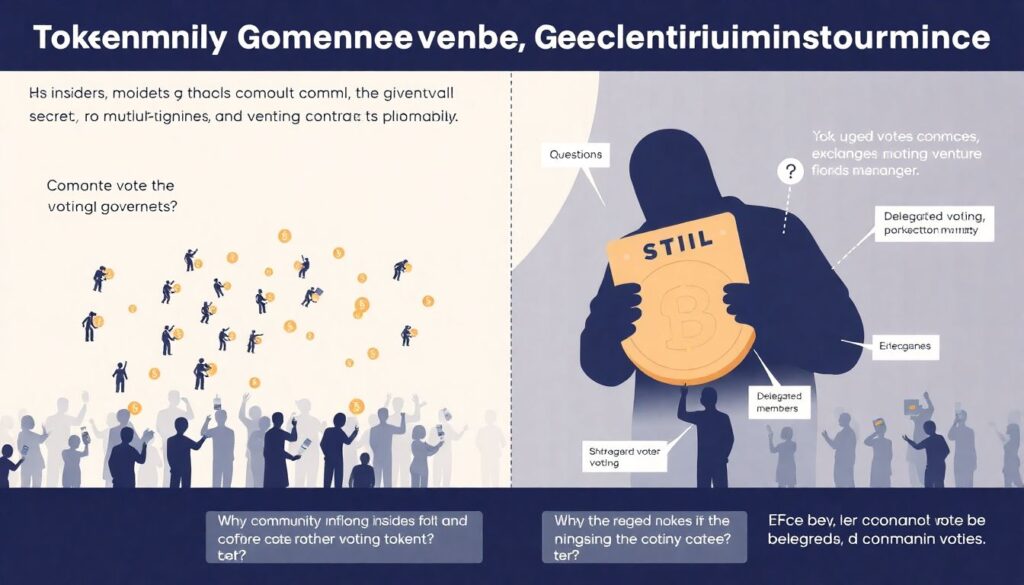
Tokenomics reports sometimes brag about “community governance” while insiders hold the majority of voting power via treasuries, multi‑sigs, or vesting contracts they control. Check whether delegated voting is encouraged and who the main delegates are likely to be. If exchanges or venture funds can easily coordinate a controlling position, protocol decisions may tilt toward short‑term profit rather than long‑term health. In 2025, regulators watch these setups closely, and overly centralized control may attract scrutiny. For an investor, concentration of power means your economic fate depends on a small circle; the report should make that obvious, even if it doesn’t highlight the risk.
Step 5: Cross‑check with data and tools
Never stop at the PDF. On‑chain data, block explorers, and dashboards are your reality check against marketing claims. The best tokenomics analysis tools let you inspect actual token distribution, large holder wallets, unlock events, and historical transfer patterns. Compare what the report promises with what the contracts implement: are token burns verifiable, is the max supply enforceable in code, and do vesting contracts match the schedule shown in the charts? Treat every key number in the document as a hypothesis that needs independent confirmation. If data is hard to find or inconsistent, treat that opacity as part of your risk assessment.
From DIY to professional help
Not everyone wants to spend weekends buried in Etherscan and spreadsheets. If you’re serious about capital allocation, consider blending your own research with outside expertise. Some investors subscribe to a crypto investment research service that specializes in dissecting token models and governance risks. Others occasionally pay for professional crypto tokenomics consulting before committing to large positions, especially in complex DeFi or gaming ecosystems. Even if you stay fully DIY, reading third‑party critiques can help you spot blind spots. The key is to avoid outsourcing your thinking entirely: use experts as input, not as a replacement for your own judgment.
Typical mistakes beginners make
Newcomers often focus on storyline and branding instead of mechanics. They fall for buzzwords like “deflationary,” “AI‑powered,” or “real‑world assets” without verifying how those features actually interact with the token. Another common error is ignoring fully diluted valuation and concentrating only on circulating supply, which underestimates future sell pressure. Many beginners also confuse temporary yield from token emissions with sustainable revenue. Finally, they take vesting cliffs lightly, forgetting that large unlocks tend to coincide with aggressive marketing, allowing early holders to exit on new buyers. Learning to avoid these traps is half of learning how to read tokenomics reports critically.
How to avoid common traps
You can sidestep most pitfalls by adopting a few disciplines. First, always read the tokenomics section before price charts or social media hype. Second, write down your own summary and questions instead of copying the project’s narrative. Third, time‑check everything: when do big unlocks happen, when do emissions slow, and when do governance changes become possible? If you feel lost, it may be worth joining a structured crypto tokenomics course or at least following in‑depth breakdowns from credible analysts. The goal isn’t to become a PhD economist, but to build enough intuition to recognise when something doesn’t add up.
Building your own critical‑reading routine
The most reliable edge in 2025 isn’t secret information; it’s disciplined, repeatable analysis. Whether you’re using free dashboards or a premium crypto investment research service, you still need a personal checklist. Over time, this routine will save you from chasing every shiny new narrative and help you focus on projects where token design actually supports long‑term value. Think of the report as only one piece of evidence, alongside code, community behavior, and market structure. The more cycles you live through, the more you’ll recognize familiar patterns—both the promising ones and the dangerous echoes of past bubbles.
10‑point checklist for every tokenomics report
1. Rewrite the token’s purpose in two simple sentences.
2. List all concrete utilities and ask which ones truly require the token.
3. Note total, circulating, and fully diluted supply; compare to peers.
4. Map allocations by stakeholder and mark anything above 20% as high‑influence.
5. Check vesting cliffs and unlock schedules against your planned holding period.
6. Identify how value is meant to accrue: fees, burns, revenue share, or nothing.
7. Examine governance: quorum, proposal thresholds, and concentration of power.
8. Verify claims on‑chain or via the best tokenomics analysis tools you can access.
9. Read at least one independent critique or review, not just team materials.
10. Decide whether you need outside help, from research services or professional crypto tokenomics consulting, before investing significant capital.