

Why reliability of price feeds matters more than ever
If you trade, build algos, or run any kind of fintech product, the quality of your price feeds quietly determines your P&L. Over the last three years (roughly 2022–2024), this has only become more obvious. Industry surveys and public reports show that:
– demand for low‑latency real time market data feed solutions in trading and analytics has grown by roughly 15–25% per year globally;
– multiple large retail brokers have reported that data glitches and stale quotes are now among the top three causes of client complaints;
– crypto venues and data vendors faced several high‑profile outages during volatility spikes in 2022–2023, which pushed many firms to diversify feeds and introduce stricter reliability checks.
In other words, it’s no longer enough that a data source is “good most of the time.” You need a structured way to assess how reliable different price feeds really are before you plug them into production or base risk decisions on them.
Key concepts: what “reliability” actually means for price feeds
Before evaluating vendors, it helps to break “reliability” into measurable components. This avoids hand‑wavy judgments like “Vendor A feels faster” and replaces them with numbers you can benchmark and automate. At a minimum, for any feed—whether it’s a crypto price feed api, equities stream, or forex price data provider—you should think about: uptime and incident history; latency and jitter; data accuracy and consistency; historical coverage and survivorship bias; resilience (failover, redundancy, DDoS protection); transparency (status pages, incident reports, methodology docs); and governance (compliance, audit trails, and versioning of symbols and corporate actions). Once you frame reliability as a bundle of these attributes, it becomes much easier to compare sources systematically instead of chasing brand names or marketing claims.
Necessary tools and data for evaluating price feeds
To assess feeds properly, you don’t actually need an army of quants, but you do need a minimal toolkit. On the infrastructure side, you’ll want at least one small server or VM in a stable data center (or cloud region) to act as your measurement node. From there you can run simple scripts that subscribe to multiple feeds and time‑stamp every tick. For latency and availability, basic logging plus a time‑synchronized clock using NTP or PTP is critical; without accurate time, measurements are misleading. For analysis, Python with libraries like pandas and NumPy is usually enough to compare lags, dropouts, and discrepancies between feeds. If you’re comparing equities vendors, your toolkit should also include a benchmark data source—perhaps the primary exchange or a well‑known reference feed—so you have a ground truth for stock price api comparison work. Finally, you’ll want monitoring tools (from Prometheus + Grafana to managed observability platforms) to visualize uptime and error rates in something close to real time and alert you when things drift outside acceptable bounds.
Helpful supporting tools and services
– A message queue or streaming platform (e.g., Kafka, Redis Streams, or a managed equivalent) to buffer and replay ticks for detailed troubleshooting and forensic analysis.
– A time‑series database (or at least efficient log storage) to keep high‑granularity order book and trade data for a few weeks, enabling deep dives into spikes, gaps, and suspicious anomalies.
– Synthetic monitoring services that periodically call each API endpoint from multiple regions, measuring response times and error codes independently of your trading systems.
Market context: what changed in 2022–2024
Between roughly 2022 and 2024, the role of data reliability shifted from “nice to have” to “board‑level risk.” Public market‑data and exchange reports indicate that overall volumes in U.S. equities and major FX pairs stayed high after the pandemic spike, while intraday volatility was punctuated by short, violent bursts—think of inflation prints, central‑bank surprises, or geopolitical news. For crypto, the collapse of several big players in 2022 led to a flight to quality: some venues lost liquidity, and data from smaller exchanges became less representative, which in turn pressured vendors to improve aggregation logic and outlier filtering. Meanwhile, cloud‑based data delivery expanded, but so did concern over vendor concentration risk, especially as a small number of providers came to dominate the best cryptocurrency data provider rankings in developer surveys. During this same period, competition increased in the mid‑tier data market, leading to aggressive pricing—sometimes at the expense of support and transparency. All of that means your evaluation process can’t just be about cost; you need a clear view of how each feed behaves under stress and how it handles edge cases, not just normal days.
Step‑by‑step process for assessing a price feed
Let’s walk through a pragmatic, test‑driven process you can apply to almost any feed, regardless of asset class. The idea is to treat every new vendor like a hypothesis: “If we ingest this feed, will it be fast, accurate, and robust enough for our use case?” You validate that hypothesis with structured experiments, not opinions. Broadly, the process looks like this: define your requirements explicitly; shortlist a few vendors; design your benchmark environment; run parallel capture tests for at least a few weeks; quantify latency, coverage, and error behavior; then evaluate trade‑offs and make a decision. Once in production, you keep a slimmed‑down version of this process running continuously as a form of vendor surveillance, catching degradations early instead of after a costly incident. The rest of this article breaks that flow into concrete stages you can implement with modest effort, aligned with the analytical mindset but described in plain language.
Step 1: Define your reliability requirements in numbers
Start by writing down what “good enough” actually means for you. For a market‑making desk, that might be sub‑10‑millisecond latency to the main exchange and 99.99% uptime; for a portfolio‑analytics web app, a few hundred milliseconds and 99.5% uptime may be acceptable. Clarify which metrics matter most: are you more sensitive to occasional long delays, or to brief outages, or to rare but big price errors? For example, if you aggregate a real time market data feed into dashboards for retail customers, a single 2‑minute outage during peak hours might cause more reputational damage than a dozen 1‑second latency spikes. Translate all of that into explicit targets: maximum acceptable lag vs. primary venues, maximum number of missing bars per day, tolerated rate of HTTP errors, and so on. Make different tiers if you serve different use cases from the same feed (e.g., “Tier 1: algo trading, Tier 2: delayed analytics”), because that will inform how strictly you judge each vendor. This upfront clarity stops you from being dazzled by glossy APIs that don’t solve your actual reliability needs.
Step 2: Build a small benchmark setup
Once you know what you’re trying to measure, spin up a sandbox infrastructure to test candidate feeds. The key principle is parallelism: for the same instruments and time periods, you subscribe to multiple feeds at once and record everything they send. For equities, you might compare two consolidated feeds and one direct‑from‑exchange source; for FX, two or three multi‑bank aggregators; for crypto, a combined crypto price feed api plus direct feeds from one or two major exchanges. All data should be time‑stamped at the edge of your network, as close as possible to where your applications normally run, using a clock synchronized to reliable NTP servers or a cloud provider’s time service. You don’t need a giant cluster to do this: a single modern instance with enough RAM and disk to store a few weeks of tick data is often sufficient, as long as you store efficiently and rotate logs. The important part is that the environment is stable and representative, so you can attribute issues to the vendor rather than your own setup.
Step 3: Collect and label data for at least 2–4 weeks
Short tests are dangerously misleading because most feeds behave nicely on quiet days. To see real reliability patterns, let your benchmark run for several weeks, ideally spanning at least one major macro event (like a central‑bank decision) or crypto volatility shock. During this period, collect not just raw ticks, but also metadata: errors, reconnect attempts, rate‑limit responses, and vendor‑side status messages. Label notable events, such as “Dec 14 – Fed announcement” or “Mar 10 – exchange X partial outage,” because you’ll want to correlate anomalies in your data with the broader market environment. Industry experience from 2022–2024 shows that many serious data outages clustered around such stress events, when underlying infrastructure and aggregation logic were pushed beyond their assumptions. The richer your labeled data, the easier it is later to distinguish between “vendor buckled under stress” and “everything broke because an upstream exchange went down.”
Step 4: Measure latency, gaps, and disagreements
Next, you turn logs into numbers. For each feed, calculate distribution of latency relative to a benchmark—say, the fastest of all feeds for each symbol, or direct exchange data when available. Rather than focusing on the average, look at the tail: the 95th, 99th, and 99.9th percentiles of delay often reveal if a provider becomes unreliable at the worst possible moments. Then scan for data gaps: missing ticks, missing candles, or sudden freezes where one vendor stops updating while others continue. Also measure disagreement: when two feeds differ on best bid/ask or last trade for the same symbol at the same time, by how much and how often? Persistent large divergences may point to faulty aggregation logic or stale sources. For a practical stock price api comparison, you might summarize results as “Vendor A is usually the fastest but shows 3× more 1‑second freezes during U.S. open, Vendor B is 10–15 ms slower but almost never freezes.” Frame findings in those terms so business users can weigh speed, stability, and cost based on their priorities instead of raw technical jargon.
Step 5: Evaluate vendor behavior during incidents
Numbers alone are not enough; you also want to know how vendors act when things go wrong. Over the 2022–2024 period, several market‑data providers suffered outages or degraded performance during extreme volatility, but the user impact varied widely depending on communication and recovery procedures. Review each vendor’s public status page and historical incident logs, looking for frequency, duration, and transparency of incidents. Simulate a mini‑incident yourself: temporarily block network access from your test node to a feed and see how your client libraries behave—do they reconnect cleanly, or do they hang and leak resources? Ask vendors about their failover strategy: do they have redundant data centers, multiple connectivity paths to exchanges, and clear RTO/RPO objectives? For your internal assessment, score not just headline uptime but also clarity of documentation, speed of support responses during your trial, and how candid they are about limitations. These qualitative indicators, while harder to quantify, strongly predict how painful real incidents will be for you.
Step 6: Compare costs versus reliability for your use case
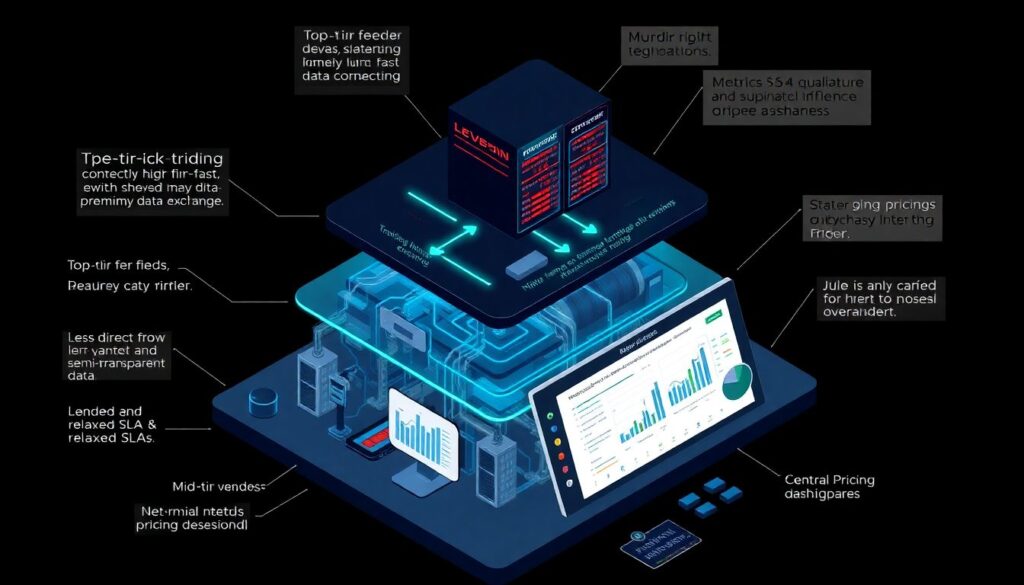
Finally, combine your metrics and qualitative insights with pricing. Since 2022, the pricing landscape has become more tiered: top‑tier feeds with direct exchange connectivity and extremely low latency command premium prices, while mid‑tier vendors undercut them with more relaxed SLAs and opaque aggregation. For each short‑listed provider, estimate total cost of ownership: recurring fees, additional infrastructure you might need (e.g., cross‑connects, dedicated lines), and internal complexity such as maintaining workarounds for quirks. Map these costs against your measured reliability: if a cheaper feed is only marginally worse on latency and gaps for your business horizon, it might be the right choice; if you do high‑frequency trading, that small difference can be unacceptable. The goal is to avoid both extremes: overpaying for capabilities you don’t use, and underpaying for a fragile feed that will fail exactly when you need it most. Turn this into a written decision memo you can revisit in a year when contracts come up for renewal.
Crypto vs FX vs equities: nuances in reliability checks
Different asset classes have slightly different failure modes, so your evaluation should adapt to each. For FX, where there is no single central exchange, your forex price data provider might aggregate prices from multiple liquidity venues. Here, reliability includes how they handle inconsistent or missing quotes from contributors and how they avoid “ghost” liquidity. You’ll want to measure not only latency but also how representative the prices are during thin liquidity hours. For equities, exchange‑driven events like halts, opening auctions, and corporate actions are common sources of data weirdness; your tests should ensure each feed correctly handles symbol changes, splits, dividends, and auction prints. In crypto, fragmented liquidity, frequent listing/delisting, and varying exchange quality mean that feed reliability depends heavily on selection and weighting of venues. When you assess a best cryptocurrency data provider candidate, dig into how they handle wash‑trading, fake volume, and outlier trades from illiquid exchanges. Across all three domains, the core methodology is the same; you just adjust your checks for the specifics of how prices are formed and what “ground truth” looks like.
What to look for in APIs and documentation
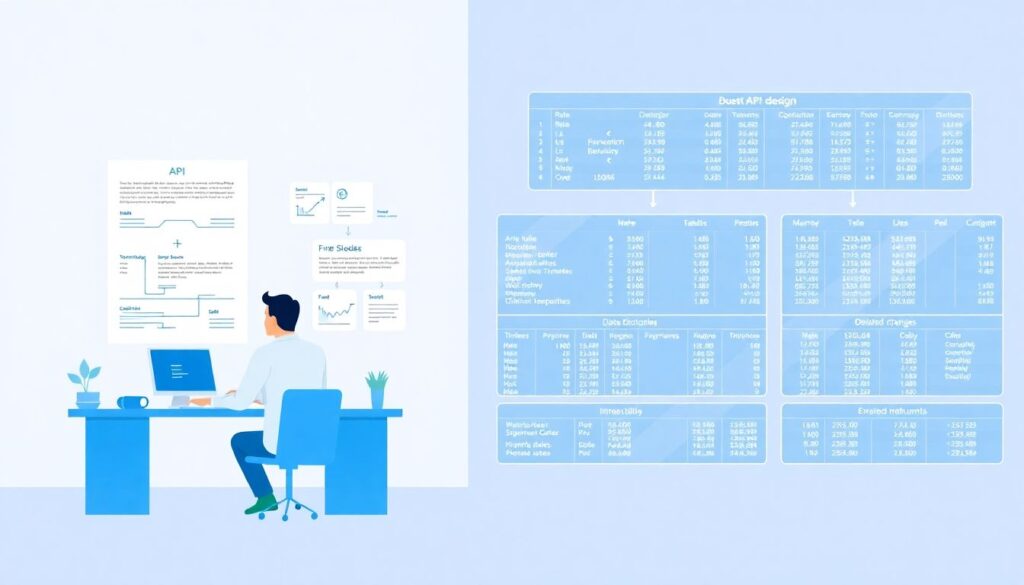
– Clear rate‑limit rules, pagination behavior, and error semantics, so you can design robust clients instead of guessing and reverse‑engineering vendor quirks.
– Detailed data dictionaries and symbol mapping rules, including how they treat delisted instruments and historical symbol changes, to avoid subtle backtest distortions.
– Explicit descriptions of aggregation logic, especially for multi‑venue feeds, including how they handle outliers, stale quotes, and conflicting trades in fast markets.
Practical troubleshooting: when your feed looks wrong
Even with a careful vendor selection process, you’ll occasionally face a situation where prices “feel off.” Maybe charts look choppy, algos behave strangely, or clients complain about weird spikes. A structured troubleshooting playbook keeps you from jumping impulsively between vendors or blaming the wrong layer of your stack. Start by verifying whether the problem is localized (only a few symbols, only one region, only one of your internal services) or widespread across the entire feed. Cross‑check against your benchmark or backup feeds: if two independent sources agree and one disagrees, that strongly suggests the odd one out is at fault. Look at your internal logs for error spikes, rate‑limit events, or recent deployments that might have introduced bugs. During 2022–2024, many post‑mortems showed that issues initially blamed on vendors were actually misconfigured caches or throttling inside client systems put in place to control costs. So before escalating, test from a clean, minimal client on a separate machine; if the anomaly persists there, you have a stronger case that it’s genuinely on the vendor side.
A simple troubleshooting checklist
– Confirm clock synchronization on all relevant servers; bad time means misleading latency and apparent “out‑of‑order” ticks that are really just mis‑stamps.
– Compare suspect symbols against at least one alternate source; document precise times, price levels, and any divergences you see, with screenshots if possible.
– Check vendor status pages, support channels, and social media for ongoing incidents; the last three years show that public communication usually lags internal detection but still provides clues.
Reducing risk with redundancy and continuous monitoring
The best way to deal with unreliable feeds is not to rely on any single one more than necessary. Industry practice since about 2022 has moved strongly toward multi‑vendor setups, especially among systematic funds and active brokers. At minimum, consider having a primary and a backup feed for critical symbols: the backup can be slower or lower resolution but sufficient to keep basic functionality alive during primary outages. Build your systems to fail gracefully: if one feed stalls, automatically fall back to another while raising alerts for human review. For your most important markets, keep ongoing metrics similar to your initial benchmark—latency distributions, error rates, and disagreement levels—so you can detect gradual degradation instead of waking up to a full outage. When you conduct a new stock price api comparison or reevaluate a crypto price feed api vendor, use these continuous metrics as reality checks against marketing claims. Over a multi‑year horizon like 2022–2024, organizations that treated vendor quality as something to monitor and measure continuously, rather than evaluated only at contract time, tended to have fewer severe data incidents and faster response when problems did arise.
Putting it all together
Assessing the reliability of different price feeds isn’t about picking the most famous vendor or the cheapest quote. It’s about treating data as critical infrastructure and running the same kind of disciplined, experiment‑driven process you would apply to a trading strategy or a production system. Over the last three years, as volumes, volatility, and regulatory scrutiny all increased, that mindset has shifted from an optional best practice to a practical necessity. Define measurable requirements, test vendors in parallel, analyze their behavior under both normal and stressed conditions, and keep lightweight monitoring running in production. Combine hard metrics with qualitative assessments of support and transparency. If you follow that playbook, you’ll end up with a price‑feed stack that you understand, can explain to stakeholders, and—most importantly—can trust when markets are moving fastest.
Комментарии