

Why a transparent crypto research methodology matters in 2025
From cypherpunks to institutional decks
In the early Bitcoin era, “research” often meant reading a Bitcointalk thread and trusting a few forum veterans. By the 2017 ICO boom, whitepapers turned into glossy pitch decks, but the underlying analysis was still mostly hand‑wavy. DeFi Summer 2020 and the 2021–2022 bull market showed how fast capital can flow into unaudited contracts and opaque tokenomics. After a long list of rug pulls, collapses and governance failures, investors now expect a clear, reproducible crypto research methodology: a process you can explain step‑by‑step, document, and have someone else independently verify.
Core principles of a transparent research process
Reproducibility, disclosure, versioning
A transparent approach to how to analyze cryptocurrency projects starts with reproducibility: another analyst, given your sources and steps, should be able to reach similar conclusions. Second, explicit disclosure of assumptions, conflicts of interest, and data gaps prevents hidden bias from creeping in. Third, treat your research like software: version your notes, log changes in your thesis over time, and keep an audit trail of key decisions. This makes post‑mortems possible when markets move against you and helps avoid quietly rewriting history after the fact.
Essential tooling for modern crypto research
From blockchain explorers to data pipelines
By 2025, the best crypto research tools form a stack rather than a single app. At the base, you need blockchain explorers and on‑chain analytics platforms to inspect wallets, flows and token distributions. Above that sit market data aggregators, derivatives dashboards and DEX screeners for liquidity and slippage analysis. Finally, note‑taking and data‑management systems let you connect facts into a coherent thesis. The goal is not hoarding tools, but building a minimal, well‑understood toolkit you can operate consistently and explain clearly in your methodology.
- On‑chain: explorers, token trackers, NFT and DeFi analytics dashboards
- Market: spot/derivatives data, order books, funding rates, volatility tools
- Research ops: note systems, citation managers, backtesting and scripting environments
Structuring your crypto due diligence checklist
Covering fundamentals, tech, and incentives
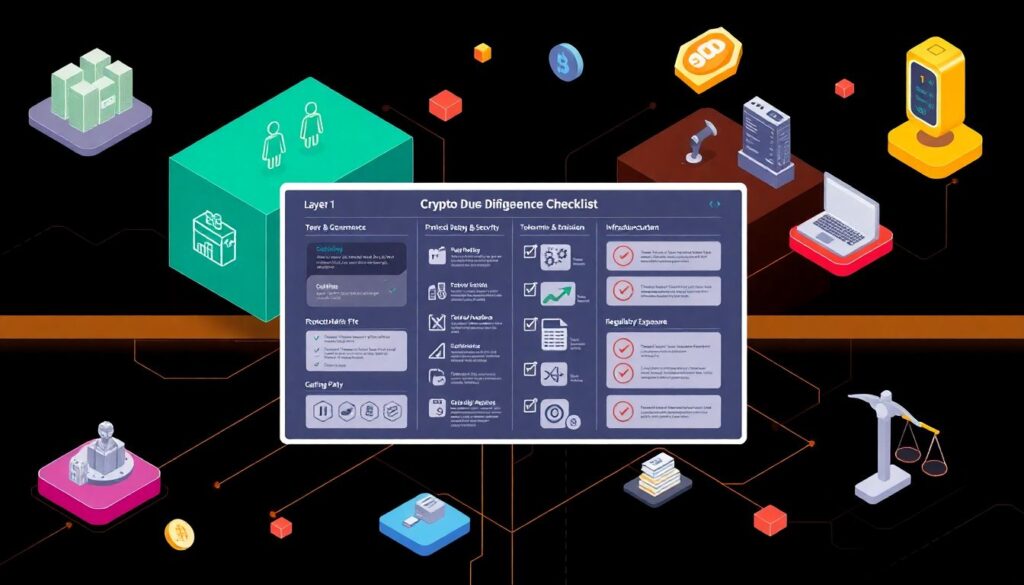
Instead of improvising each time, assemble a crypto due diligence checklist that you adapt per sector (L1s, DeFi, infrastructure, gaming). At minimum, include categories for team and governance, protocol design and security, tokenomics and emissions, product‑market fit, and regulatory exposure. Under each, define concrete questions and observable metrics, not vague impressions. This shifts you from gut‑driven enthusiasm to evidence‑based assessment and gives you a consistent lens to spot red flags early, especially when narratives or influencers are pushing a project aggressively.
- Ask: “What must be true for this to succeed?” and test each condition explicitly
- Demand verifiable data: contracts, audits, metrics, not just narratives or roadmaps
- Separate facts, interpretations, and pure speculation in your notes
A step‑by‑step process: from idea to documented verdict
Scoping, data collection, synthesis
Start by defining the research scope: trading thesis, long‑term investment, or ecosystem mapping. Then create a research plan with concrete questions and timelines. For how to evaluate crypto investments, segment your workflow: first collect raw data (docs, code, metrics), then evaluate each checklist section independently before forming a high‑level thesis. Finish with a written “research memo” that clearly states the opportunity, key risks, scenarios, and invalidation criteria. A transparent crypto research methodology always links back conclusions to specific evidence, not vibes.
How to analyze cryptocurrency projects in practice
People, code, economics, and usage
In practice, how to analyze cryptocurrency projects comes down to four lenses. People: verify identities where possible, track prior track records, and examine how decisions are made. Code: check repositories, release cadence, audit history, and whether deployed contracts match open‑source code. Economics: model token supply, emissions, and incentive loops, and look for hidden dilution. Usage: confirm real adoption via on‑chain activity, revenues and retention, not just social‑media hype. Each lens gets its own section in your memo, with explicit strengths and weaknesses.
Dealing with noisy and conflicting data
Troubleshooting your research pipeline
Crypto markets are information‑dense but signal‑poor. Troubleshooting your process starts with recognizing typical failure modes: over‑reliance on a single dashboard, trusting unaudited Dune queries, or confusing volume from wash trading with organic flows. When data conflicts, log each source, investigate methodology differences, and prefer primary on‑chain data over derived metrics. If a crucial variable remains uncertain, treat it as a scenario input (“if TVL is overstated by 50%, then…”). Transparency here means clearly flagging uncertainty bands instead of burying them in footnotes.
Risk management and post‑mortems
Learning loops around your thesis
Even a robust process will produce losing trades or misjudged projects. The key is to embed post‑mortems into your crypto research methodology. After major outcomes—good or bad—review your initial memo, update the timeline with new events, and ask whether the thesis failed, the timing was off, or risk controls were weak. Archive these reviews in a searchable system. Over time you will see patterns: for instance, recurring overconfidence in unsustainable yields, or underestimating smart‑contract upgrade risk. Make these patterns explicit inputs to future checklists.
Communicating research to others
From private notes to public frameworks

Finally, transparency is about how you present your work to teammates, clients, or the wider community. When you share how to evaluate crypto investments, include your sources, assumptions, and known blind spots rather than only a bullish or bearish rating. Show screenshots or references to specific dashboards, transaction hashes or governance votes. Use a consistent structure across reports so readers know where to find risk factors and alternative scenarios. Over time, this builds trust: people can disagree with your conclusions but still respect the clarity of your process.