

Why on‑chain metrics belong in your portfolio process
If you’re sizing crypto positions today purely по price charts and narratives, you’re basically flying a plane on one instrument. On‑chain data adds the missing dashboards: real user flows, liquidity shifts, and risk build‑up in real time. Over the last three years this stopped being a “nice to have”. Between 2022 and mid‑2024, daily stablecoin transfer volume on major chains consistently sat in the tens of billions of dollars, and DeFi total value locked, which dropped below $50B after the 2022 crash, recovered above ~$80–90B by late 2023. Those flows don’t appear on a candlestick chart, but they directly shape which assets deserve a place in your crypto portfolio construction using on-chain analytics platforms rather than just gut feeling.
From “cool charts” to actual portfolio decisions
Most people hit a wall at the same place: they open some on‑chain dashboard, see glossy graphs, and then don’t know what to do with them. The core question is simple: how to use on-chain data for crypto trading and portfolio allocation in a way that changes weightings, entries and exits — not just your conviction. The trick is to map each metric to one decision: “more/less allocation”, “earlier/later entry”, “tighter/wider sizing”, or “hedge/no hedge”. Once you force yourself to state *which switch* a metric controls, vanity charts disappear, and only a handful of useful indicators remain in your workflow.
The three layers of useful on‑chain metrics
You can think of the best on-chain metrics for crypto investment strategies as falling into three buckets: growth, liquidity, and risk. Growth tells you whether the network is actually being used (active addresses, transaction count, fee revenue, smart contract interactions). Liquidity gauges how easily you can get in or out (DEX depth, CEX flows, stablecoin supply on that chain). Risk warns you about concentration and leverage (whale dominance, lending utilization, liquidation levels). Any metric that doesn’t clearly sit in one of these three and tie to a concrete action is probably clutter for portfolio construction.
Real cases: how professionals actually use on‑chain signals
Case 1: Rotating out of “ghost chains” after the 2021 boom
After the 2021 bull market, several L1 tokens looked cheap on price multiples alone. Yet when mid‑sized funds dug into on‑chain analytics tools for crypto portfolio management, they saw a different picture. Active addresses on some alternative L1s had dropped by more than 60% between Q4 2021 and late 2022, while daily fees fell to almost zero. One fund that compared address growth and DEX volume trends across six L1s cut exposure to the two weakest chains by half in early 2023 and reallocated to Ethereum and a single high‑growth L2. Over the next 12 months, that basket outperformed their old “equal weight L1” construct by a double‑digit percentage simply because capital was shifted away from chains where on‑chain demand had actually died.
Case 2: Stablecoin supply as a timing tool in 2022–2023
During the brutal 2022 bear, a few desks watched aggregate stablecoin supply as a proxy for “dry powder”. From early 2021 to early 2022, circulating dollar‑pegged coins on major chains more than doubled, then started to contract sharply as risk appetite vanished. In Q4 2022 the decline in supply finally flattened; by mid‑2023 it stopped falling and briefly ticked upward. Funds that treated this as a leading indicator for renewed risk‑taking began slowly de‑underweighting beta, increasing small caps from near‑zero exposure to a low single‑digit slice. This didn’t catch the exact bottom, but it helped them avoid the classic mistake of staying at extreme defensiveness while on‑chain money quietly crept back into the system.
Case 3: DeFi credit risk in 2023 liquidations
A less obvious but important real‑world case involved DeFi lending platforms. In 2023, as prices chopped sideways, utilization rates on some smaller lending markets quietly climbed above 80–90%, with a high share of collateral in a few long‑tail tokens. On‑chain dashboards showed liquidation clusters at relatively tight price bands. One risk‑aware allocator saw this and capped exposure to those tokens at a lower portfolio weight, even though price action looked calm. When a sharp correction hit and cascaded liquidations ripped through those markets, their drawdown stayed manageable, while peers who ignored on‑chain risk concentration took far larger hits.
Step‑by‑step: integrating on‑chain into portfolio construction
1. Define what you actually manage
Before drowning in metrics, pin down what your portfolio is: long‑only vs. long‑short, discretionary vs. systematic, time horizon, and liquidity needs. An intraday trader and a quarterly rebalancing allocator will not (and should not) use the same set of on‑chain tools. For example, a long‑only multi‑asset fund might only rebalance monthly, but still rely on 7‑ and 30‑day averages of active addresses and DEX volumes to pick winners and losers within its sector buckets. Clarity on mandate prevents you from tracking ten indicators that your strategy can never react to in time.
2. Choose a small, durable core of metrics
You don’t need twenty exotic ratios. A realistic starting “core” for multi‑month horizons can look like this: growth via active addresses and protocol fees; liquidity via DEX depth and stablecoin flows; risk via concentration of holdings and leverage. For each metric, write down beforehand what range means “overweight, neutral, underweight” for you. For instance, you might decide that if a token’s 90‑day average of active addresses is growing 20–30% faster than its sector peers *and* fee revenue trends higher, it deserves a weight above its neutral index allocation.
3. Hard‑wire metrics into your sizing rules
This is the crucial step investors skip. Take your existing process — say, you build a 15‑asset portfolio, start from equal weights, then tilt based on conviction. Now add explicit on‑chain rules. Example: if DEX liquidity on a token falls below a defined threshold versus your position size, cap its weight; if whale addresses (top 1% of holders) keep accumulating while retail activity stays flat, limit the maximum weight to avoid over‑reliance on a few wallets. The point is not to become fully mechanical, but to make it impossible to ignore clear on‑chain red flags when deciding position sizes.
4. Use a structured review cadence
On‑chain data updates every block, but your portfolio definitely should not. Professional desks often review “slow” metrics, like development of active users and fee trends, monthly or quarterly, while monitoring faster ones, like leverage and inflows, weekly or around key events. A simple rule is: growth metrics drive medium‑term tilts, liquidity metrics shape execution and caps, and risk metrics trigger hedges or de‑risking when they flash extreme readings. This keeps you from over‑reacting to noise while still responding to major structural shifts.
Non‑obvious ways to use on‑chain metrics
Behavioral edges, not just fundamentals
On‑chain isn’t only about fundamentals like usage; it’s also a behavioral microscope. For instance, tracking the behavior of “smart money” wallets versus the broader holder base can reveal when hype outruns informed capital. If long‑tenured wallets (entities holding a token for a year or more) quietly reduce exposure while new entrants chase price spikes, that divergence often precedes drawn‑out distribution. Integrating this into your portfolio might mean trimming exposure when smart money outflows breach a threshold, even if price is still marching upward.
On‑chain as a volatility filter
Another under‑used idea is using on‑chain activity to adapt volatility assumptions. Suppose you run a risk‑parity‑style book and usually scale exposure by realized price volatility. During 2021–2023, several tokens showed a pattern where on‑chain activity (transactions, swaps, bursts of new addresses) exploded *before* volatility expanded. If you monitor these surges, you can pre‑emptively tighten position sizes or widen stop ranges ahead of expected turbulence, rather than reacting after volatility has already spiked and forced you into poor exits.
Liquidity microstructure for execution, not just selection
Many people think of on‑chain data only for asset selection, while execution is left to intuition. In practice, granular DEX pool data tells you a lot about *how* to trade: which pools to route through, what trade size starts to move the price, and when time‑of‑day liquidity is better. Advanced setups plug on-chain crypto market analysis software for investors directly into their execution logic, slicing orders to minimize price impact or routing through multiple pools to reduce slippage. Even if you rebalance only once a month, this can materially reduce transaction costs and make marginal assets viable to include.
Alternative approaches if you can’t build a full stack
Working with prebuilt indices and signals
If you don’t have the time or skills to maintain your own dashboards, you can still embed on‑chain views by piggybacking on curated indices and signals. Several research shops publish sector indices weighted by usage metrics, fee generation, or user growth rather than market cap. Allocating a slice of your portfolio to such an index is a simple way to incorporate on‑chain fundamentals without managing the data directly. You retain discretion over the rest of the book but let one part be governed by standardized on‑chain rules.
Lightweight scripting on top of public dashboards
Another alternative is to use existing on-chain analytics tools for crypto portfolio management and layer your own alerts or spreadsheets on top. Many platforms expose APIs, so you can set basic conditions — like “alert me if lending utilization on this protocol exceeds 70%” or “if weekly DEX volume drops more than 40% from the 90‑day average, flag for review”. You don’t build full infrastructure, but you still turn metrics into concrete triggers that feed into your portfolio reviews.
Blending off‑chain and on‑chain factor models
For quant‑inclined investors, a pragmatic route is to treat on‑chain metrics as additional factors in a model you already trust. For instance, you may have factors like momentum, value proxies, and liquidity. You can augment them with a “usage” factor (normalized active addresses and fees), a “decentralization” factor (holder concentration), and a “credit risk” factor (lending utilization and stablecoin health). You don’t have to rely on on‑chain alone; instead, you let it slightly tilt your weights in line with other indicators, improving robustness.
Choosing and using tools without drowning in them
Evaluating analytics platforms with a portfolio lens
When you look at crypto tools, ignore marketing and ask: does this help me make a better *allocation* decision? Many on-chain analytics tools for crypto portfolio management are geared towards traders hunting short‑term alpha, not portfolio engineers. For multi‑asset investment, you need: clean historical time series you can export, clear entity‑adjusted metrics to avoid double‑counting, and configurable benchmarks (sector averages, chain totals). If a platform’s charts look fancy but you can’t turn them into rules like “if metric X crosses Y, then adjust weight Z”, it’s probably wrong for your purpose.
Integrating software into your workflow
Even the best on-chain analytics tools for crypto portfolio management are only as useful as their integration. Decide where in your process they live: initial screening, portfolio construction, risk review, or execution. Professionals often maintain a minimal “investment dashboard” with no more than ten primary charts that map directly to position‑sizing rules. Deeper analytics are available, but only consulted when something unusual appears. This discipline keeps you from constantly tinkering with your model just because a new metric appears on Crypto Twitter.
Professional “life hacks” for using on‑chain in portfolios
1. Separate metrics by time horizon
One of the most useful hacks is to bucket every on‑chain metric by time horizon before you use it. For example, structural adoption metrics (like long‑term address growth) belong in the “thesis” bucket and should barely change quarter to quarter, while leverage, funding, and DEX order‑book depth belong in the “tactical” bucket and can influence weekly hedging. Mixing the two leads to frantic over‑trading on slow‑moving trends or ignoring fast‑moving risks because they don’t fit your long‑term story.
2. Always normalize by sector or chain
Raw numbers can be misleading. An L2 going from 10k to 50k daily active addresses may look like explosive growth, but if its closest competitor moved from 100k to 400k in the same period, relative momentum is weak. Pros habitually compare tokens not to absolute levels, but to sector medians and percentiles. When using the best on-chain metrics for crypto investment strategies, think in spreads: a protocol’s fee growth minus its sector average, or its user retention versus competing dApps. Portfolio tilts should follow those relative edges rather than raw size.
3. Watch cohort behavior, not just totals
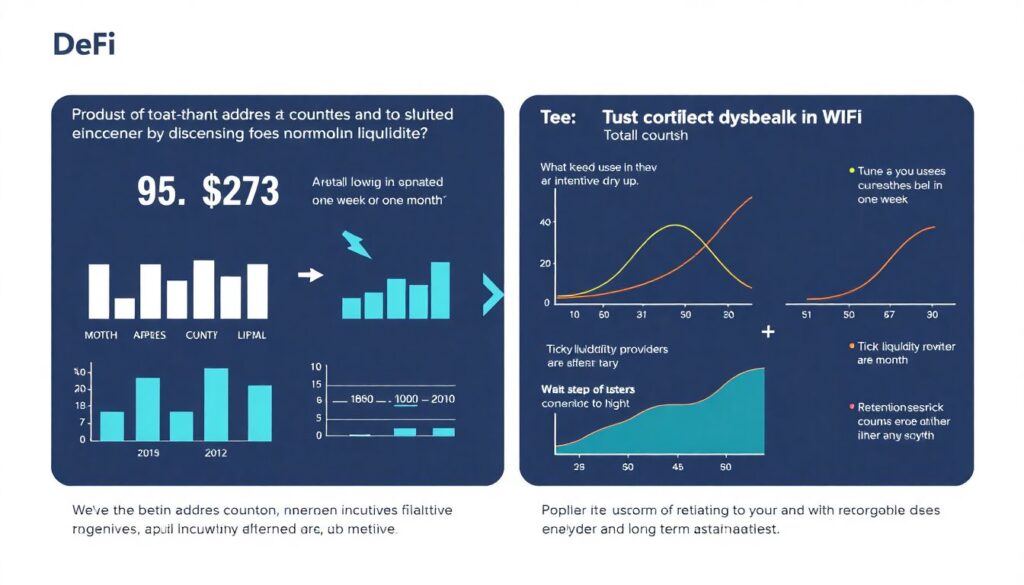
Total address counts and TVL can be inflated by mercenary liquidity. When incentives dry up, those flows disappear. A more subtle but powerful edge comes from tracking user cohorts: what share of users keeps coming back after one week or one month, how sticky liquidity providers are, and whether long‑standing addresses are accumulating or distributing. Integrating this into portfolio decisions helps you avoid tokens whose metrics look good only due to temporary farming or short‑term campaigns.
4. Explicitly cap “on‑chain ignorance risk”
If you know your on‑chain coverage is weak in a particular niche, such as emerging L2s or obscure DeFi primitives, professional risk management means you don’t give those assets full size. A practical rule: set a “data coverage” score for each asset and tie maximum allocation to that. If you lack visibility into who holds the token, how leveraged it is, or where liquidity sits, keep your weight smaller until you have better instrumentation. This keeps unknown unknowns from dominating your portfolio.
Where the space is heading (and what it means for you)
Since 2022, both institutional and retail use of on‑chain data has expanded significantly. Market intelligence firms report that client demand for on‑chain datasets and dashboards has grown by double‑digit percentages year‑on‑year, and new analytics startups have raised substantial funding to build more specialized pipelines. At the same time, more exchanges and brokers are integrating basic on‑chain metrics directly into their front ends, blurring the line between charting tools and on-chain analytics tools for crypto portfolio management. For investors, the direction is clear: in the coming years, ignoring on‑chain context will look as dated as ignoring earnings in equities.
Pulling it all together
To wrap it up, integrating on‑chain data into your portfolio isn’t about memorizing dozens of indicators. It’s about a disciplined mapping from a handful of well‑chosen metrics to *specific* decisions on asset selection, sizing, timing, and risk controls. Whether you build a fully systematic framework or just add a few robust guardrails, the combination of crypto portfolio construction using on-chain analytics platforms and your existing investment process can materially improve both returns and drawdown control. Focus on clarity: define what each metric means for your portfolio, test those rules over the last three years of volatile markets, and let the data quietly nudge your decisions, rather than overwhelm them.