

Why publishing crypto research in 2025 is a very different game
Crypto in 2025 is not the wild west it was in 2017–2021.
Research has become a product.
Funds pay five figures per month for solid on‑chain analytics. Retail traders buy niche reports. Protocols sponsor deep dives. And the same piece of work can (and usually should) live on several crypto research publishing platforms at once.
But the moment you start to publish crypto research on multiple platforms, you hit practical issues:
– How not to cannibalize your own reach
– How to structure free vs paid content
– How to avoid getting throttled by algorithms
– How to protect your IP while still being shareable
Let’s walk through the modern, 2025‑level playbook.
—
H2: Define your role before you pick platforms
H3: What exactly are you selling?
Before worrying about the best platforms to publish crypto research, you need a brutally clear answer to one question:
Are you selling information, access, or execution?
– Information – reports, dashboards, macro theses, token breakdowns
– Access – live Q&A, Discord/Telegram groups, calls with you
– Execution – signals, trade setups, portfolio allocations
Different roles fit different platform stacks:
– Pure researcher → long‑form, searchable, citation‑friendly platforms
– Influencer‑analyst → social channels + short digest formats
– Signal provider → closed communities + API/bot delivery
You can mix these, but don’t pretend you’re a neutral “researcher” if 90% of your value is signals; platforms and regulators treat that very differently in 2025.
—
H2: Map your platform stack to a funnel, not your ego
H3: The three‑layer stack that actually works
Think in terms of funnel layers instead of random platform hunting.
1. Discovery layer (top of funnel)
This is where people first see your name:
– X (Twitter)
– YouTube / Shorts / TikTok
– Reddit / niche forums
– Conference talks, podcast guest spots
2. Depth layer (mid‑funnel)
Where serious people go to read and bookmark:
– Substack, Paragraph, Mirror (long‑form)
– Personal blog (self‑hosted, SEO‑oriented)
– ResearchHub, Medium (less critical, but still used)
3. Monetization & community layer (bottom‑funnel)
– Substack paid tiers / Patreon / Memberful
– Discord / Telegram / closed Discourse forum
– Gumroad, Lemon Squeezy, Ko‑fi for one‑off reports
– B2B retainers with funds, market makers, protocols
A simple, effective 2025 setup:
– Discovery → X + YouTube
– Depth → Substack and/or your own site
– Monetization → Substack paid + private Discord/Telegram
You then distribute crypto market analysis across multiple platforms by assigning each layer a specific role instead of duplicating everything everywhere.
—
H2: Practical distribution patterns that work in 2025
H3: The 70 / 20 / 10 content allocation rule
To keep sanity when you publish on many platforms, use a 70/20/10 split:
– 70% – core content lives in one canonical place (e.g., Substack or your own site)
– 20% – adapted versions on other platforms (threads, videos, slides)
– 10% – experiments (new platforms, AI‑native formats, interactive)
Example (realistic 2025 workflow):
– Full 4,000‑word report with charts → Substack (canonical home)
– 20–30 tweet/X thread + 30‑sec video summary → X & TikTok
– 8–10 slide deck with key charts → LinkedIn + Telegram pinned
– Short PDF executive summary → sent to B2B list
Your analytics will almost always show:
– 60–80% of new eyeballs from X/TikTok/YouTube
– 70–90% of reading time on Substack/blog
– 80–95% of revenue from paid Substack + private community
Which is exactly what you want.
—
H3: Where to actually post: platform‑by‑platform considerations
Substack / Paragraph / Mirror
– Great for: long‑form, email list building, recurring revenue
– Substack in 2024–2025: many crypto newsletters sit in the $5–$25/month range, with top names crossing $50k+/month in subs
– Paragraph / Mirror: crypto‑native, onchain subscriptions, great if your audience is already Web3‑heavy
X (Twitter) in 2025
– Still the main real‑time hub for crypto
– Long‑form posts (up to 25k chars) now viable for mini‑reports
– Pay attention to: external links often get lower reach, so lead with value in‑thread, link out at the end
Telegram & Discord
– Telegram dominates for alpha groups and signal channels
– Discord is still standard for DAO / protocol research hubs and community calls
– Ideal for: delivering intra‑day updates, bots, alerts, and gated chats
YouTube & short‑video platforms
– Mid‑length breakdowns (10–20 minutes) of your written research
– Short clips (30–60 seconds) for discoverability
– In 2024, YouTube ad CPMs for finance/crypto often sat between $8–$25; enough to matter but rarely your main revenue
On‑chain and dev‑oriented platforms
– GitHub, Dune, Flipside, Token Terminal, Glassnode: show your methodology, dashboards, scripts
– Great for: credibility with funds, data teams, protocol foundations
—
H2: How to avoid content cannibalization across platforms
H3: Make one place the “single source of truth”
A common trap: posting full, identical reports everywhere.
That kills:
– SEO (duplicate content)
– Platform algorithms (they want native content)
– Your ability to charge (too much free leakage)
Instead:
1. Choose one canonical home
Usually your own site or Substack/Paragraph. This is what you update and edit over time.
2. Everywhere else, share partials or alternate formats
– Thread with 3–5 key charts, but not full datasets
– 2–3 conclusions, but not step‑by‑step methodology
– Video walkthrough summarizing, but linking for details
3. Brand consistency, not content identity
The same thesis, same branding, same core takeaway – but adapted to each platform’s grammar.
—
H3: A concrete content reuse example
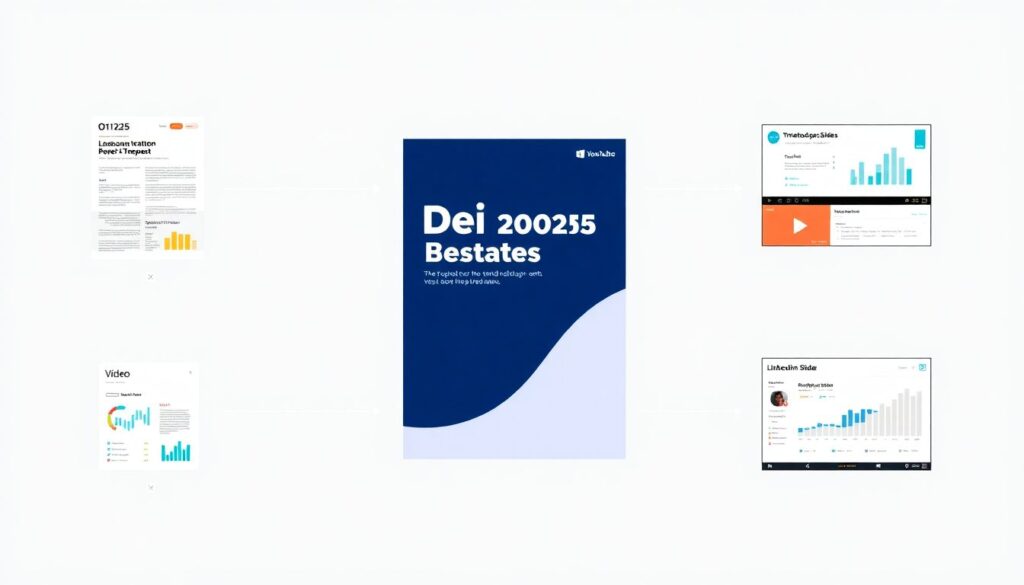
Assume you’ve produced a DeFi sector rotation report for Q1 2025.
You can:
– Publish full 25‑page PDF + web version → canonical platform
– Turn top 5 charts into a 15‑tweet thread → X
– Record a 12‑minute “walkthrough” → YouTube
– Share 2 summary slides + one key chart → LinkedIn
– Drop a TL;DR + key table of sector flows into → Telegram alpha group
– Turn the dataset & queries into → Dune dashboard + GitHub repo
Each piece points back to the canonical version and your mailing list. You’re not spamming; you’re repackaging.
—
H2: Monetization mechanics in 2025: what actually pays
H3: Free vs paid: draw the line with intent, not length
You don’t need to lock everything behind paywalls to earn.
You need to decide what drives trust vs what drives cash.
A practical split:
– Free layer
– Macro views, weekly recaps
– Educational explainers (what is restaking, modular liquidity, L2 economics)
– Delayed versions of past paid pieces (e.g., unlocked after 60–90 days)
– Paid layer
– Time‑sensitive reports (upcoming unlocks, governance catalysts)
– Quant signals and dashboards
– Portfolio allocations, execution playbooks
– Private calls and Q&A
This also addresses compliance: public posts stay away from specific “buy X now at $Y”, while paid content is contractually framed and properly disclaimed.
—
H3: How to monetize crypto research reports in practice
There are several proven revenue paths in 2024–2025. The most common:
– Subscriptions (B2C)
– Substack, Patreon, crypto‑native subs (Paragraph/Mirror)
– Typical pricing in crypto: $15–$60/month retail, with annual discounts
– Subscriptions (B2B)
– Funds, trading firms, OTC desks, crypto companies
– Deals: $1k–$10k/month depending on your edge and coverage
– Per‑report sales
– Single PDF or web access sold via Gumroad / Lemon Squeezy / Shopify
– Good for deep, evergreen reports (e.g., “Restaking Landscape 2025”, “L2 MEV Economics”)
– Consulting & bespoke research
– Protocols, infra teams, funds hire you to build models or do due‑diligence decks
– Often $100–$400/hour or fixed‑fee per mandate
When people ask how to monetize crypto research reports, the answer in 2025 is usually:
mix low‑friction subscriptions with a few high‑ticket B2B or consulting clients.
—
> Technical block: basic subscription math
>
> – 300 paying users at $25/month → $7,500/month
> – 1 B2B client at $4,000/month → $4,000/month
> – 2 flagship reports per year at $199, sold to 150 people each → ≈$60,000/year
>
> Now you’re at roughly $15k/month on average, before tax and expenses, with a fairly realistic audience size if you publish consistently and cross‑post smartly.
—
H2: Selling trading research and signals without blowing yourself up
H3: Legal, ethical, and reputational realities

By 2025, regulators in the US, EU, and parts of Asia are much more active around financial‑like advice, even in crypto.
If you want to sell crypto trading research and signals online, you need to think about:
– Disclaimers & terms – clear “not investment advice”, risk disclosures, past performance notes
– Jurisdiction – where you operate from and which clients you target
– Automation – bots that auto‑execute signals on user accounts can trigger stricter licensing regimes
Ethically, be transparent about:
– Your own positions
– Your track record (include losers, not just winners)
– Your methodology limitations (e.g., “on‑chain only, no CEX flow”)
It’s not just about not getting sued. It’s about having an audience that sticks around more than one cycle.
—
> Technical block: tracking signal performance
>
> Minimal serious setup in 2025:
>
> – Use a dedicated, read‑only account for model portfolio tracking
> – Log every entry/exit with timestamp, price, and reasoning (GitHub, Notion, or even a CSV)
> – Calculate:
> – Win rate (%)
> – Average R/R (reward:risk)
> – Max drawdown
> – Sharpe or Sortino ratio over 6–12 months
> – Consider publishing a monthly performance summary; that’s a huge differentiator versus “vibes‑based” signal channels
—
H2: Data, tooling, and reproducibility
H3: Show your work (selectively)
In 2025, serious readers distrust black‑box claims.
You gain credibility by revealing enough of your pipeline to show rigor, while still keeping some secret sauce.
Common pattern:
– Open
– Main data sources: on‑chain (Dune, Flipside), CEX data, funding rates, order books, GitHub commits
– High‑level methodology: “Top‑down sector allocation based on TVL momentum, fees, and FDV/Revenue”
– Closed
– Exact factor weights, smoothing windows, ML model parameters
– Proprietary datasets or curated address lists
You can publish sanitized Jupyter notebooks, SQL queries, or indicator formulas to demonstrate competence, then keep your optimized versions private for paying clients.
—
> Technical block: a minimal reproducible pipeline
>
> 1. Pull raw data
> – On‑chain: Dune / Flipside SQL
> – Market: CCXT or exchange APIs
> 2. Clean and store
> – Save to Postgres or Parquet files
> 3. Analyze
> – Python (pandas, numpy), R, or even Excel for simpler work
> 4. Visualize
> – Matplotlib/Plotly, TradingView, Observable notebooks
> 5. Publish
> – Export charts as PNG/SVG
> – Host interactive dashboards on Dune, Streamlit, or Plotly Dash
>
> Document each step. The more consistent your pipeline, the faster you can turn ideas into publishable research across several platforms.
—
H2: Modern distribution tactics that actually move the needle
H3: Algorithm‑aware formatting in 2025
Every platform has its quirks. Lean into them instead of fighting.
On X:
– Lead with a contrarian or specific claim (without being clickbait):
“L2 fees are down 68% since 2023, but MEV revenue per user is up 24%. Here’s why that matters.”
– Use 1–3 dense charts, not 10 low‑impact images.
– Link to your full report in the second or third tweet, not the first.
On YouTube:
– Titles like: “Ethereum Restaking in 2025: Who Actually Makes Money?”
– Add your research link high in the description + pinned comment.
– Use chapters (0:00 intro, 1:20 data sources, 4:30 key chart, etc.) for easier skimming.
On Telegram:
– Keep messages short and frequent: one idea per post.
– Pin an up‑to‑date “Start here” message with links to your main research hub.
On Substack / blog:
– Use clear H2/H3, internal links between past posts, and obvious CTAs (“Get weekly DeFi flows in your inbox”).
– In 2024–2025, organic search still matters; research‑grade crypto posts do get Google traffic, especially if they target specific narratives and tickers.
—
H3: Working with collaborations and sponsors without losing trust
By 2025, many protocols and infrastructure teams run research grants or sponsor programs.
This is great, if handled transparently.
Best practices:
– Always mark sponsored pieces clearly.
– Negotiate for editorial independence – no forced price targets, no “must be bullish” clauses.
– Prefer working with multiple sponsors over time rather than becoming “the house analyst” of a single chain, unless that’s explicitly your job.
Sponsors often pay $2k–$20k per deep dive or multi‑month retainers.
When stacked with subs, this can be a substantial part of your income.
—
H2: Risk management for your research brand
H3: Handling being early, wrong, or out of consensus
If you publish often, you will be wrong. Publicly.
The difference between researchers who build a durable reputation and those who disappear:
– The good ones log and review their misses.
– They publish post‑mortems: “Why our 2024 ETH/BTC rotation thesis failed.”
– They adapt their models and explain the changes.
This matters more in crypto than in most markets because narratives shift violently. Your readers are pattern‑matching your behavior as much as your calls.
—
H3: Security and operational hygiene
Publishing on many platforms means more attack surface:
– Enable 2FA (preferably hardware keys) on all accounts.
– Keep a separate, clean machine or browser profile for managing high‑value accounts.
– Don’t share API keys or private dashboards casually; assume links will leak.
If you run paid groups:
– Use platform‑based gating (Substack → Discord roles, Stripe → Memberful → Discord/Discourse).
– Rotate invite links, especially for Telegram and Discord.
– Consider watermarking PDFs or using expiring links to reduce casual resale.
—
H2: Building a sustainable research business, not just posts
H3: Track metrics that matter, not vanity
In 2025, you’re competing with AI‑generated noise and copy‑paste content.
Your edge is consistency, clarity, and judgment.
Track:
– Subscribers / email list size – your main asset
– Activation – % of subs who open at least 1 email in 30 days
– Conversion – free → paid rate (1–5% is a healthy band)
– Retention – monthly churn (keep it under 5–8% if possible)
– B2B leads – how many warm conversations per quarter
This keeps you honest about what kind of publishing actually supports your life, instead of chasing likes.
—
H3: Putting it all together
In 2025, a sane, modern approach could look like this:
– Publish 1–2 serious pieces per week on your main research hub.
– Break each into at least 3–4 native pieces for other platforms.
– Maintain 1–2 paid products (subscription + occasional flagship report).
– Run 1–3 B2B relationships for stability.
– Regularly refactor your pipeline and templates so publishing across platforms is process‑driven, not chaos.
Crypto cycles will keep swinging. Platforms will come and go.
If you treat your output as a structured product – with clear funnels, pricing, and deliberate multi‑platform distribution – your research can stay relevant and profitable regardless of where the next bull run starts.
And that’s ultimately the core practical consideration in 2025:
Don’t just publish everywhere. Design a system where every platform knows its job in your research business.