

Why governance token metrics matter in 2025
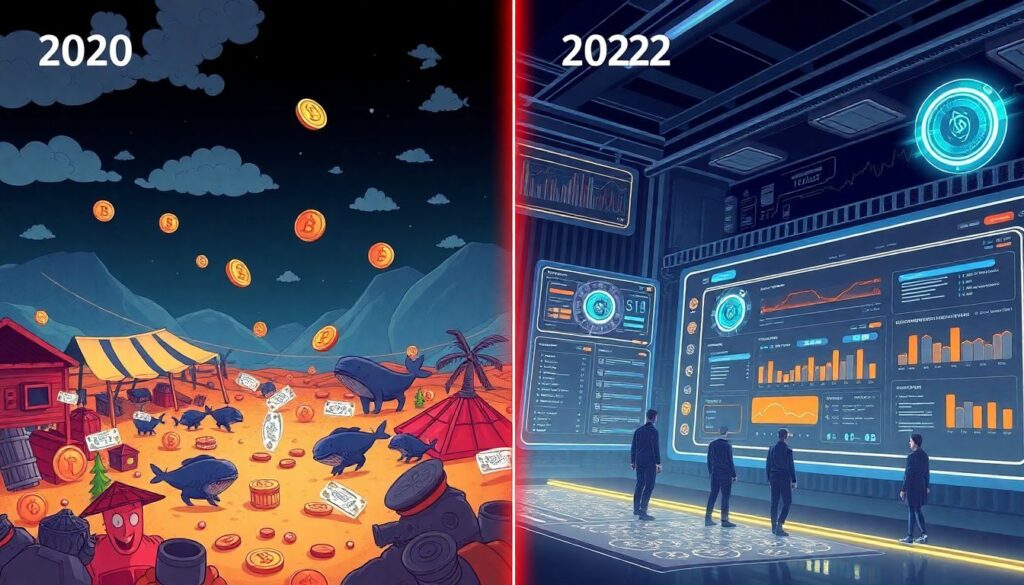
If you’ve watched crypto since the DeFi summer of 2020, you’ve seen governance tokens evolve from “yield farm coupons” into serious levers of power. Early DAOs mostly counted wallets and quorum; whales dominated, voter apathy was ignored, and metrics were primitive. By 2022–2023, high‑profile governance attacks, rage quits и “vampire votes” forced communities to look deeper into who actually votes, how often, and under what incentives. In 2025, analyzing governance token metrics for voting behavior is less about vanity dashboards and much more about risk management: preventing capture, spotting coordination patterns, and proving to regulators and users that your DAO isn’t just a few insiders flipping switches.
Key metrics that really describe voting behavior
When people say “governance analytics”, they often mean turnout percentage and that’s it. That’s nowhere near enough. Useful metrics start with voter participation over time: repeat voters versus one‑time addresses, time‑to‑vote after proposal creation, and the share of delegated votes versus direct ones. You also want concentration indicators, like what fraction of voting power is in the top 10 delegates and how often they disagree with each other. On top of that come behavioral metrics: how governance token balances change before and after proposals, which addresses always vote with the winning side, and which only show up for specific topics like treasury spending or parameter changes. Together these give a realistic portrait of your governance culture.
Comparing main approaches to analysis
There are three big ways to analyze governance token metrics for voting behavior today: raw on‑chain querying, using specialized dashboards, and integrating full‑stack analytics platforms. Direct node or subgraph queries are the most flexible: you can define any custom metric and reproduce results independently. However, they demand data engineering skills, careful handling of contract upgrades, and awareness of quirks like vote snapshots and delegation history. Prebuilt dashboards give quick insights without much effort, but you’re locked into someone else’s schemas and assumptions. Full‑stack platforms sit in the middle: they standardize common governance schemas while still letting you extend models or plug into your own data warehouse.
On‑chain centric governance analysis
A pure on-chain governance token voting analysis approach starts from transaction traces, event logs, and historical token balances. You model proposals as state machines, then reconstruct snapshots of voting power at specific block heights. This method is highly transparent: anyone can verify your queries, and you’re not relying on opaque indexing. It’s also chain‑agnostic, so you can compare Ethereum mainnet DAOs with L2 or sidechain deployments using the same logic. The downside is cost and complexity. You need reliable infrastructure, handle chain reorganizations, and watch for contracts that emit non‑standard events or use meta‑governance layers. For smaller DAOs, this can be overkill unless they pool resources or use managed infrastructure.
Off‑chain and hybrid data sources
Pure on‑chain views miss a lot of nuance. Most DAOs today rely on off‑chain signaling platforms, forums, Snapshot‑style voting, and social coordination in Discord or Farcaster. Hybrid analysis blends on‑chain data with off‑chain context: forum activity before votes, wallet reputation, even L2 bridging behavior right before a big proposal. This is where governance token analytics tools that ingest both blockchain data and API feeds from discussion platforms really shine. The trade‑off is trust: you’re relying on external services to be honest, available, and not to silently change data schemas. Hybrid models are powerful for understanding motivation and coordination, but you must be explicit about what’s verifiable on‑chain and what isn’t.
Technology stack and popular tools
By 2025, you’re not starting from scratch. There’s a whole ecosystem of governance token analytics tools, from open dashboards crafted in SQL‑based environments to commercial suites embedding machine learning and alerting. Some position themselves as the best platforms for DAO governance metrics, bundling prebuilt templates for participation, concentration, and delegate performance. Others focus on blockchain governance data analytics services, offering managed indexing, data warehousing, and advanced attribution like clustering related wallets. At the high end, governance token holder behavior analysis software adds anomaly detection, forecasting of turnout under different quorum rules, and simulations of how changing delegation mechanics would shift power structures across your community.
Плюсы и минусы текущих технологий
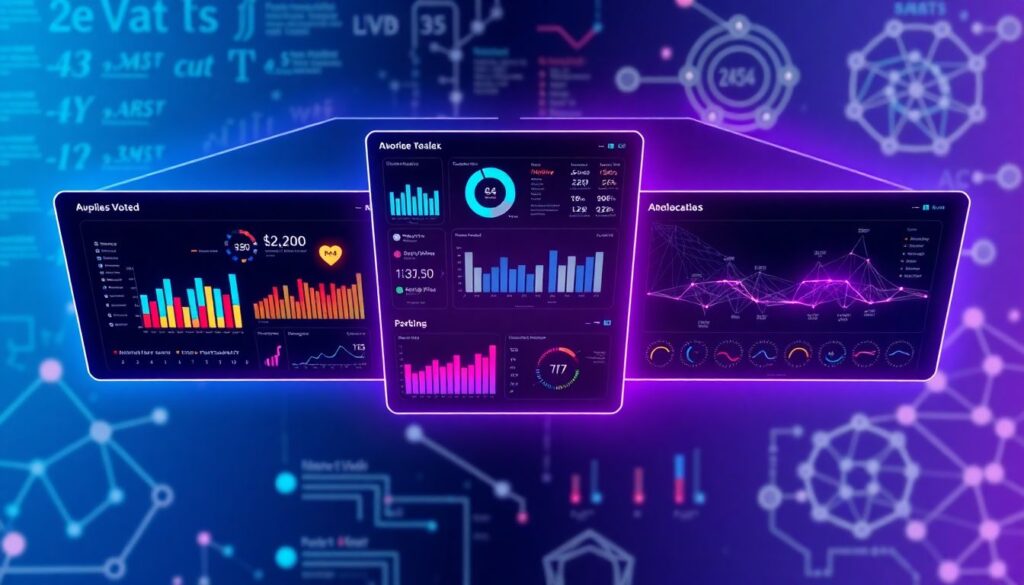
Current tooling is strong on descriptive analytics and weak on causal understanding. Dashboards make it trivial to visualize who voted and with how much power, which is a clear advantage for transparency and community discussions. Yet many solutions still struggle with nuanced questions like: did airdrop farmers meaningfully distort outcomes, or are they just passive holders? Off‑the‑shelf platforms often abstract away methodology, so you inherit their biases. On the positive side, managed services reduce maintenance overhead and help smaller DAOs access serious analytics. On the negative side, vendor lock‑in, proprietary metrics, and spotty coverage of long‑tail chains remain recurring complaints from governance researchers and protocol teams alike.
How to choose an approach and tools
Before adopting any stack, it’s worth mapping your DAO’s maturity and risks. A small experimental collective with a few dozen active voters doesn’t need enterprise‑grade analytics; a protocol securing billions in TVL absolutely does. To structure the decision, you can walk through a simple sequence:
1. Define your critical governance risks: capture, apathy, collusion, regulatory scrutiny.
2. List the metrics that actually illuminate those risks, not just what looks pretty on a chart.
3. Check which tools can compute those metrics transparently and reproducibly.
4. Test export and integration paths with your existing infra (data warehouse, monitoring, public reports).
5. Align on budget, vendor lock‑in tolerance, and open‑source vs. closed‑source trade‑offs within the community.
Practical recommendations for running the analysis
Once you’ve picked tools, the real work is process. Start by standardizing a core governance report: participation per proposal, concentration, delegate behavior, and temporal patterns like weekend vs. weekday voting. Automate as much as possible, using blockchain governance data analytics services or scripts to refresh data around each major proposal. Share results publicly and invite critique; in practice, community feedback often surfaces edge cases your models missed. Combine quantitative outputs with qualitative reviews of forum threads to see whether voter blocs actually justify their positions. Over time, track how changes in incentives, such as staking rewards or bribe markets, shift participation and alignment with long‑term protocol goals.
Тенденции 2025 года и что будет дальше
In 2025, three trends stand out. First, predictive analytics is becoming standard: protocols simulate voter behavior under hypothetical rule changes before shipping them on‑chain. Second, we see deeper integration between governance token holder behavior analysis software and risk frameworks used by institutional participants, who demand auditable metrics before delegating large stakes. Third, cross‑DAO analysis is emerging: comparing how similar communities handle turnout, delegation, and contentious proposals to derive best practices. As regulation slowly catches up, having robust, explainable governance analytics will likely become a prerequisite for any DAO that wants to interface with traditional finance without sacrificing its autonomy and credibility.