
Why a “research audit” is the only way to survive crypto in 2025
Crypto in 2025 is not 2017, and not even 2021. AI-driven trading bots spam liquidity pools, Telegram “alpha” groups are farmed by the same market makers who seed the rumors, and regulatory radar is sweeping wider than ever. In this environment, just “reading the whitepaper” is a good way to lose money.
A proper crypto research audit is the grown‑up version of DYOR. It’s not just scrolling X, it’s a structured, repeatable process you can run before you buy, while you hold, and when you’re deciding whether to exit. Think of it as your personal internal audit department for every token you touch.
Below is a step-by-step guide to conducting a crypto research audit that fits the reality of 2025, with real cases, non‑obvious checks, alternative methods, and a few pro-level hacks.
—
Step 1. Define the mission: what exactly are you auditing?
Before digging into dashboards and GitHub, be brutally clear: are you checking a project or your portfolio?
– Single‑project audit → “Should I deploy fresh capital here?”
– Portfolio audit → “Does what I already hold still make sense?”
In both cases, start with a tiny, written scope. It can be one paragraph but must answer:
– What is the time horizon? (3 months? 3 years?)
– What role should this asset play? (speculative bet, core holding, hedge, cashflow play)
– What risks are you willing to accept? (smart contract, regulatory, illiquidity, team risk)
This sounds obvious, but skipping it is how people buy a degen micro‑cap and then complain it doesn’t behave like BTC. A serious crypto investment risk assessment and audit framework always begins by defining the job you’re hiring the asset to do.
—
Step 2. Build a modern crypto due diligence checklist (2025 edition)
Most “DYOR checklists” floating online are stuck in 2021. They ignore AI‑generated content, L2 wars, and restaking risk. You need a 2025‑ready crypto due diligence checklist for investors.
At minimum, include:
– Core basics: problem statement, target users, token role, revenue model
– Tech stack: chain, smart contracts, L2/L3 dependencies, restaking or shared security
– Governance: token vs off‑chain, multisigs, upgrade powers
– Economics: emission curve, vesting, real yield vs ponzinomics
– Regulation: token classification risk, KYC/AML exposure, geo‑blocking
– Data & behavior: on‑chain activity, liquidity robustness, holder distribution
Treat this checklist as a living document. Each time you get caught by some new failure mode (rug‑adjacent treasury decisions, governance capture, opaque MEV extraction) — update it. Over time you’ll converge on your personal best methodology for fundamental analysis of crypto projects instead of borrowing someone else’s.
—
Real‑world case: the “looks solid on paper” L2
In 2024, a hyped L2 launched with big‑name backers and slick docs. On paper, everything looked textbook:
– Known VCs
– Audited contracts
– Busy social feeds
But a deeper research audit flagged three issues:
1. Upgradability: A 2‑of‑3 multisig could unilaterally pause withdrawals. Two signers were executives of the same company — no real decentralization of control.
2. Liquidity fragility: 90% of the “TVL” was farm capital from one yield aggregator. Once incentives cooled, it fled in days.
3. Governance theater: A “DAO” existed, but all proposals were “advisory” and the team multisig could override them.
Price pumped, then a governance conflict triggered a pause in withdrawals. The token didn’t rug, but drawdown exceeded 80% and liquidity dried up. Investors who ran a proper checklist saw the governance centralization early and either sized bets accordingly or stayed away.
—
Step 3. Read the story, then attack it
Start with the narrative: website, litepaper, recent AMAs, and long‑form posts. You want to understand how the team wants to be perceived — then try to break that story.
Ask:
– What is the core promise in one sentence?
– Who is the *paying* user, not just the “community”?
– What is the critical dependency? (Oracle, sequencer, restaked security, a single market maker, etc.)
Then flip roles and become the hostile analyst:
“If I had to convince a skeptical committee *not* to touch this project, what would I say?”
Write down at least three strong bear arguments. This simple exercise is one of the most underrated, non‑obvious techniques in how to audit cryptocurrency projects step by step. It forces you out of confirmation bias before you get attached to the upside.
—
Non‑obvious solutions: use AI, but don’t outsource your brain
In 2025, large language models and specialized crypto copilots are great at:
– Summarizing dense technical docs
– Translating Solidity comments or Rust code explanations
– Comparing protocol parameters between competitors
But they are terrible at sensing human intent, regulatory mood, and subtle misalignments.
Smart workflow:
– Let AI summarize the whitepaper and docs;
– Let *you* do the interpretation and judgment.
If an AI summary makes a project sound generic (“decentralized, scalable, secure”) with no concrete details on users and business model, it’s already a warning sign.
—
Step 4. Dig into the team and incentives, not the hype
Forget whether the founder has a cool X account. You care about:
– Track record in shipping (not just raising)
– How they handled previous failures
– How they personally benefit if the token underperforms
Two pro moves:
1. Name search + on‑chain search
– Google + LinkedIn + GitHub + previous companies.
– Then search major chains for wallets linked to the team (often disclosed in docs or multisigs) and see: did they dump previous projects early? Did they ape into obvious rugs?
2. Social graph check
– Who follows them and interacts regularly?
– Which credible builders or researchers engage with their technical posts (not just retweets of announcements)?
This is where professional crypto research and portfolio audit services often add value: they already track these social and on‑chain graphs in the background, spotting recycled teams and hidden links between “independent” projects.
—
Real case: the quiet serial rugger
A 2023 DeFi protocol looked clean: fresh branding, decent tokenomics, external audit. What flagged it:
– A multisig signer address appeared in two previous projects that rugged in 2021.
– Those projects were barely mentioned in public bios.
– On‑chain, the same cluster of wallets dumped team tokens aggressively both times.
Retail didn’t notice — the narrative was that “the space has matured, everyone learns”. But disciplined auditors wrote: “Team track record negative; avoid except maybe for ultra‑short‑term farming.”
Six months later, this new protocol didn’t rug outright but “migrated contracts” in a messy way that left farm participants with illiquid tokens and unclear recourse.
—
Step 5. Technical and on‑chain checks (without being a dev)
You don’t need to be a Solidity wizard to run a basic technical sniff test.
Key non‑negotiables:
– Open‑source or not? If core contracts are closed and upgradeable, risk is high.
– Audits and monitoring:
– Who audited? Reputable or vanity shop?
– Any post‑audit monitoring / bug bounties?
– Upgrade path: Is it governed via DAO, council, or 2‑of‑3 multisig?
Then run a simple, repeatable on‑chain check:
– Daily active users and transactions
– Number of unique interacting addresses over time
– TVL composition (not just total, but which tokens, how concentrated)
– Share of volume or TVL coming from top 10 addresses
You can do this via:
– DeFiLlama, Artemis, Dune dashboards
– Project’s own analytics (cross‑check with third parties)
– Public bots on X (for DEX volume, liquidations, etc.)
The goal is to see whether behavior matches the narrative. A “retail DeFi savings” app with 95% TVL from a single crypto fund is not what it claims.
—
Alternative method: red‑teaming the protocol
Instead of just reading dashboards, imagine you’re a malicious but rational player:
– How would you extract value from naive users here?
– Could you frontrun or sandwich typical trades?
– Is there any way governance or an upgrade key could redirect protocol fees?
This mental red‑team approach exposes design flaws that don’t show up in glossy metrics. Even basic thought experiments can reveal:
– Dangerous oracle dependencies
– Misaligned fee structures
– Naive “fixed APY” promises backed by volatile yield sources
You’re not trying to become a hacker; you’re stress‑testing the design like one.
—
Step 6. Tokenomics and economic gravity
Tokenomics in 2025 have evolved from “line goes up” to “who actually pays whom and why”. Key questions:
– Where does real cashflow come from? Users, speculators, other protocols, or emissions?
– Who bears the long‑term dilution? Retail only, or team and VCs too?
– What’s the utility gradient? Is the token actually required for anything critical?
Look beyond pretty unlock charts and ask:
– Do emissions pay for adoption, or are they just yield to farm and dump?
– Are buybacks discretionary or algorithmically enforced? Who can change them?
– How will token incentives need to change once early growth slows?
A subtle red flag: protocols that promise high “real yield” but whose fees are mostly paid by other yield‑farming protocols subsidized with yet more emissions. That’s not sustainable revenue; that’s structured leverage.
—
Pro tip: underwrite flows, not narratives
Professional auditors often model a simple flow:
1. Who brings capital into the system (users, LPs, lenders)?
2. How is value transformed (trading, lending, options, restaking)?
3. Who extracts value (the protocol, MEV searchers, market makers, governance token holders)?
If, after mapping flows, governance token holders only get value if new entrants keep arriving and fees stay artificially high, you’re closer to a reflexive game than a sustainable business.
—
Step 7. Regulatory and jurisdictional reality check
In 2025, regulatory risk is not theme‑park decor; it’s core risk. Even if you’re a degen, watching this can save you from frozen assets or forced delistings.
Check:
– Is the project restricting certain jurisdictions? (US, EU, UK, etc.)
– Any history of cease‑and‑desist letters, warnings, or enforcement actions?
– Is KYC involved, and who stores that data?
– Could this token be treated as a security in big markets?
Non‑obvious angle: infrastructure risk. Even if the protocol is “decentralized”, interfaces may rely on:
– Centralized frontends (Cloudflare, US‑based hosting)
– Custodial bridges
– Compliant partners who can be pressured
In 2024–2025, several DeFi apps stayed technically online but practically unusable once frontends were geofenced and partners exited under regulatory pressure. Your audit should factor “operational censorship” as a failure mode.
—
Step 8. Portfolio‑level research audit: zooming out
Once you can audit single projects, extend the same rigor to your whole portfolio.
Ask:
– What percentage of your capital depends on:
– The same chain?
– The same oracle provider?
– The same narrative (e.g., restaking, RWAs, AI‑DeFi mashups)?
– How correlated are your holdings during market stress, not just on green days?
– What share of your portfolio has real, on‑chain cashflow vs pure speculation?
This is where a crypto investment risk assessment and audit framework becomes more than a buzzword. It’s a structured walkthrough of:
– Exposure by sector (L1, L2, DeFi, infra, NFTs, RWA, meme)
– Counterparty and custody risk (CEXs, bridges, custodians, smart contracts)
– Liquidity tiers (what you can exit in minutes vs days vs “not at all in a panic”)
You can still be as aggressive as you want — but you’re being aggressive on purpose, not by accident.
—
Case study: the invisible concentration trap
An active trader in 2024 held:
– ETH, liquid staking tokens, LSD‑backed stablecoins
– L2 tokens heavily dependent on ETH
– Restaking tokens securing ETH‑centric AVSs
On paper: diversified, many tickers.
In reality: 80%+ exposure to one base asset and its staking design.
When a restaking‑related bug triggered temporary chaos in ETH DeFi, the entire portfolio drew down in sync, even positions that “weren’t related to restaking”. A portfolio‑level research audit would have flagged this hidden concentration months earlier.
—
Step 9. Build your own “mini‑desk”: tools and workflows
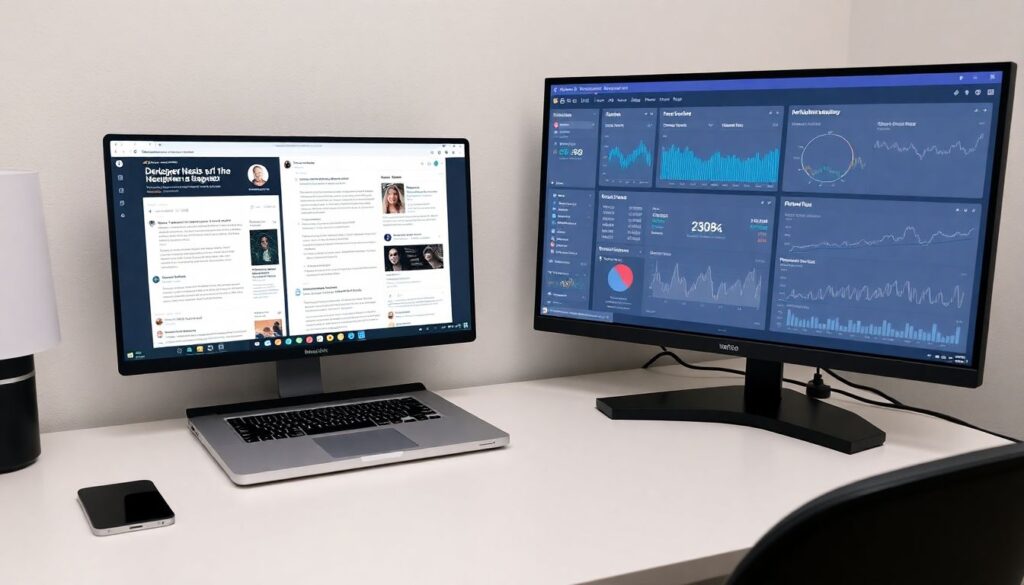
You don’t need a Bloomberg terminal. You do need a minimal, consistent toolkit and routine.
Core categories:
– News & narrative: curated X lists, a couple of serious newsletters, developer chats/Discords
– On‑chain data: DeFiLlama, Dune, chain explorers, a few specialized dashboards
– Governance feeds: Tally, Snapshot, forum RSS / email notifications
– Documentation memory: Notion/Obsidian/Google Docs where you store your audit notes
Once a week, run a lightweight portfolio audit:
– Any major governance changes in top holdings?
– Any sudden drop in liquidity, TVL, or usage?
– Any new regulatory/regional issues?
This rhythm matters more than any single tool. Consistency beats occasional deep dives fueled by FOMO.
—
Pro‑level lifehacks for research nerds
A few tricks professionals quietly use:
– Create “kill conditions” in advance
For each position, define clear events that mean “we’re out” — e.g.
– Team takes control of governance keys
– Major oracle change without proper audit
– Liquidity on main pairs drops below X
This strips emotion from exit decisions.
– Shadow a few great wallets
Track a small set of on‑chain addresses belonging to respected builders or funds (transparent ones). Don’t copy every trade; just watch what *they* deem worth their time.
– Time‑delayed conviction
When you find something exciting, force a 24–72 hour delay before sizing up. Use that time only for *bear‑case* research. If you still like it after that, you probably understand the risk.
– Borrow checklists, keep conclusions
Look at how different funds structure their memos and combine elements you like. But always write your own conclusion paragraph from scratch. That’s where your edge lives.
—
Step 10. When to call in the pros
There’s a point where DIY hits diminishing returns — especially for treasuries, DAOs, and high‑net‑worth portfolios. That’s where professional crypto research and portfolio audit services make sense.
They can:
– Track dozens of governance venues in parallel
– Maintain internal databases on exploits, rugs, and suspicious teams
– Run deep on‑chain analysis of flows, not just public charts
– Stress‑test scenario outcomes (regulatory shocks, de‑pegs, chain halts)
You don’t need this for every $2,000 swing trade. But if a single bad blow‑up can materially change your life or your DAO’s runway, paying for serious external eyes is often cheaper than learning the lesson the hard way.
—
Putting it all together: a repeatable 2025 audit flow
Here’s a compact version of how to audit cryptocurrency projects step by step in today’s market:
– Clarify your investment mission and risk tolerance.
– Run a modernized, personal crypto due diligence checklist for investors.
– Attack the narrative with strong bear arguments.
– Investigate team incentives and past behavior, on‑chain and off‑chain.
– Check basic technicals and on‑chain reality; red‑team the design.
– Underwrite tokenomics via real value flows, not buzzwords.
– Map regulatory and infrastructure risk, not just token classification.
– Audit your portfolio as a system, not as a bag of isolated coins.
– Build a small but consistent research workflow with the right tools.
– Escalate to professional support when the capital at risk justifies it.
If you treat every position as an ongoing audit instead of a one‑time decision, you’ll naturally adapt as the space evolves. Trends will keep shifting — L2s today, intent‑based architectures and AI‑agents tomorrow — but a disciplined research framework ages better than any narrative.
And in a market where “everyone is early” until they’re not, that discipline is often the real edge.