
XRP Falls Below $1 as Korean Bank Brings Ripple Payments to Business Transfers
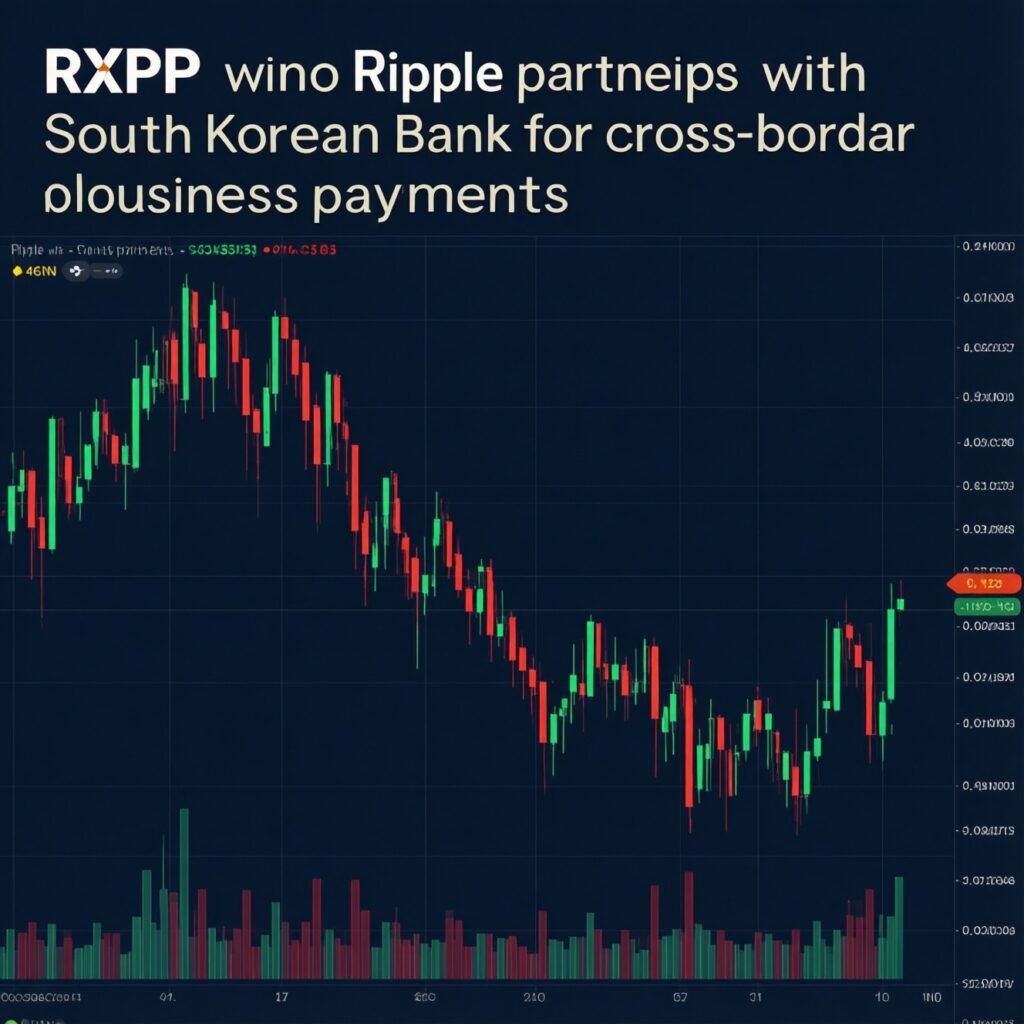
XRP has dropped below the psychologically important $1 threshold for the first time since November 2024, even as Ripple expands its presence in South Korea's financial sector. The token fell to approximately $0.98 during Asian trading hours on Tuesday, extending a decline that has seen XRP retreat sharply from last year's highs above $3.
The sell-off arrived shortly after Ripple announced a new partnership with Jeonbuk Bank, a regional South Korean lender that will introduce Ripple Payments for cross-border business transactions. The agreement makes Jeonbuk Bank the first regional bank in the country to deploy Ripple's payment platform for international transfers.
The development adds to Ripple's growing list of Korean partnerships. Earlier in 2026, the company announced custody and digital-asset infrastructure agreements with Kyobo Life Insurance and Kbank. Jeonbuk Bank, established in 1969 and headquartered in Jeonju, is the leading financial institution in South Korea's southwestern Jeonbuk province.
Ripple says the bank will use its infrastructure to provide near-real-time settlement for business payments. The service is expected to operate continuously, allowing transfers to be completed within seconds or minutes rather than requiring several days through traditional correspondent banking channels and the SWIFT messaging system.
The new offering will be available to corporate customers, including importers, exporters, technology startups and online content creators. Fiona Murray, Ripple's managing director for Asia Pacific, described the agreement as evidence of accelerating institutional interest in digital-asset infrastructure across Korea. She also emphasized the important role regional banks play in supporting local businesses and the broader economy.
However, the announcement leaves a crucial question unanswered: will the transactions use XRP, or will they be settled with Ripple's dollar-pegged RLUSD stablecoin? Ripple's recent institutional strategy has increasingly focused on RLUSD, which the company promotes as a settlement asset for banks and other financial institutions. The company did not immediately clarify which digital asset will be used in Jeonbuk Bank's implementation.
This distinction is central to understanding why new Ripple partnerships have not automatically translated into stronger demand for XRP. As discussed in this analysis of XRP falling below $1 despite Ripple's Korean banking expansion, the growth of Ripple's payments network does not necessarily mean that every transaction creates direct buying pressure for the XRP token.
The composition of activity on the XRP Ledger highlights the same trend. Tokenized real-world assets on the network were valued at roughly $1.38 billion earlier this month, with about $845 million attributed to RLUSD. That means the stablecoin represents more than 60% of the total value of issued assets, strengthening the argument that Ripple's institutional growth is increasingly linked to stablecoin settlement rather than XRP usage alone.
For investors researching how to buy XRP, the distinction between Ripple's corporate services and the token's market demand is particularly important. A bank can adopt Ripple Payments while using a stablecoin or another settlement mechanism, leaving XRP exposed primarily to speculation, liquidity conditions and broader cryptocurrency market sentiment.
Market positioning shows that traders remain more optimistic than the recent price action might suggest. XRP futures open interest stood near $2.78 billion during the week, while Binance and OKX data indicated that long positions outnumbered shorts by more than three to one. Such an imbalance can create additional downside risk if the market continues lower, because crowded long trades may be forced to close.
At the same time, sentiment surrounding XRP on social platforms has deteriorated to its weakest level in approximately three months. This divergence between derivatives positioning and public sentiment suggests that traders are still anticipating a recovery, but confidence in the bullish case is weakening as the token struggles to reclaim $1.
The latest XRP price movement also raises fresh questions for anyone following an XRP prediction. Support below $1 has long been viewed as technically and psychologically significant. A sustained recovery above that level could encourage buyers to return, while a prolonged move below it may expose the token to further selling and trigger additional liquidations in leveraged markets.
Another factor is the growing competition between XRP and RLUSD within Ripple's ecosystem. The debate around XRP vs RLUSD is no longer limited to traders; it is becoming increasingly relevant to banks evaluating speed, liquidity, volatility and regulatory considerations. XRP offers a decentralized market and the possibility of rapid liquidity transfers, but its price fluctuates considerably. RLUSD, by contrast, is designed to maintain a stable value against the U.S. dollar, making it potentially easier for companies to use in accounting and settlement operations.
Ripple's expansion into South Korea nevertheless represents a meaningful step for its payments business. Banks adopting Ripple Payments can help establish a broader institutional network, improve the company's regional credibility and create future opportunities for digital-asset settlement. Whether those benefits ultimately flow through to XRP will depend on the assets selected by participating banks and on the extent to which the token is integrated into their payment corridors.
For now, the market is separating Ripple the payments company from XRP the digital asset. The company continues to secure banking relationships, while the token has fallen below a key support level. Investors will be watching transaction details from Jeonbuk Bank, changes in XRP futures leverage and the balance between XRP-based liquidity and RLUSD adoption to determine whether Ripple's Korean expansion can eventually translate into renewed demand for XRP.